The Inspiration Myth: Why Waiting for a Spark Can Stall a Project
The inspiration myth can keep a project idle. Use a small, defined first action to test an idea, make a useful choice and decide whether to continue.
The inspiration myth can keep a project idle even when you already know what you want to make. Instead of collecting material for a finished piece, treat the first action as a small test: make one provisional version, inspect what it reveals, then decide whether the idea deserves another move.
What does the inspiration myth get wrong?
It treats a feeling as a permission slip. Curiosity or excitement may appear while you work, but neither has to arrive before you begin. A small attempt gives you something specific to judge: perhaps the idea becomes clearer, or perhaps you discover that it does not hold your attention.
This is different from forcing yourself to complete a project. The point is to find out what happens when the idea meets a form, such as a paragraph, a rough drawing or a spoken line of dialogue. You can stop with that fragment and still have made a useful decision.
How can a small test clarify an idea?
Choose an action that puts one version of the idea in front of you, rather than trying to gather every possible detail. If you are considering a story, write a short exchange between two characters. If you are considering a drawing, sketch the object from one angle. If you are unsure about a subject, make a deliberately rough sample that shows what you think the work might be.
The sample is not evidence that the idea is good or bad. It is a way to expose a choice you could not make while the idea remained abstract: does the scene need a different point of view, does the object suit the page, or is another subject more compelling?
- Check whether the first sentence gives you a clear next move; if it does, add one line, and if it does not, replace the opening with a more specific moment.
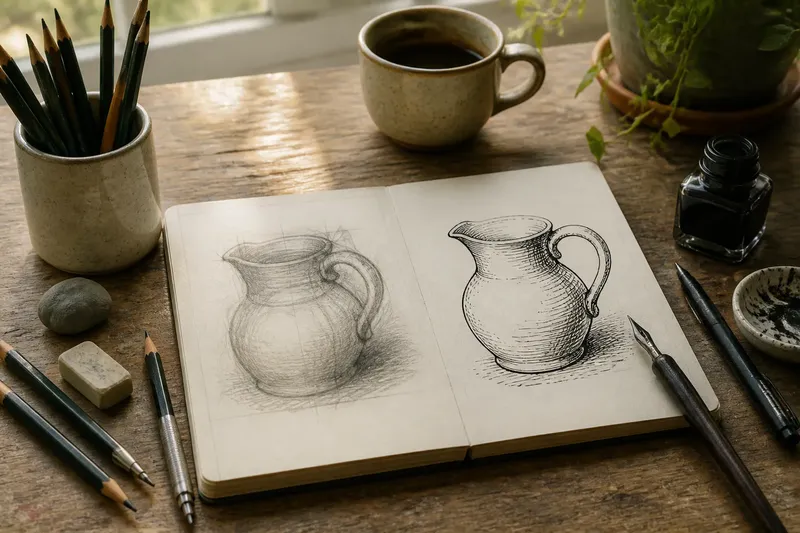
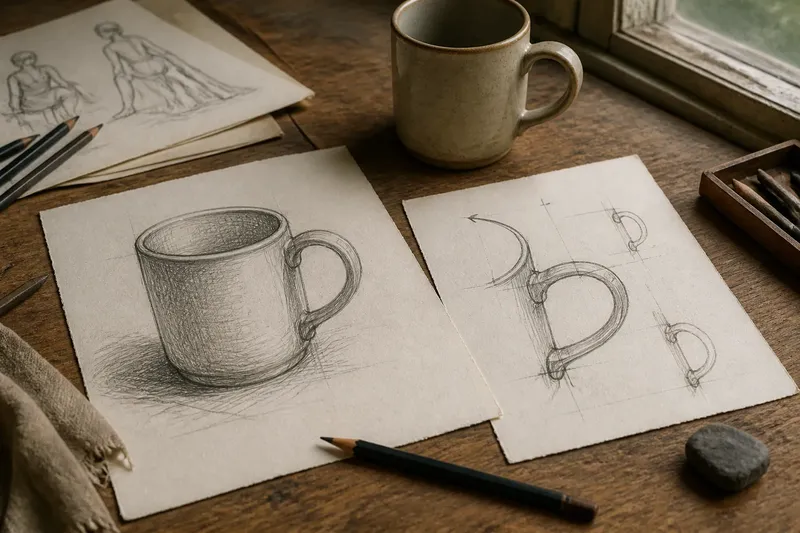
- Check whether the sketch’s largest shape is easy to recognise; if it is, refine one edge, and if it is not, redraw the shape more simply.
- Check whether the sample uses a form suited to the idea; if it does, make a second small section, and if it does not, try a different form such as a dialogue instead of description.
- Check whether one part holds your attention; if it does, develop that part, and if nothing does, set the sample aside rather than polishing it.
- Check whether your next instruction names a visible action; if it does, follow it, and if it says only “make it better”, rewrite it as a specific change.
- Check whether a missing tool prevents the test; if it does, use a simple substitute such as scrap paper for a sketch, and if it does not, begin with the materials already at hand.
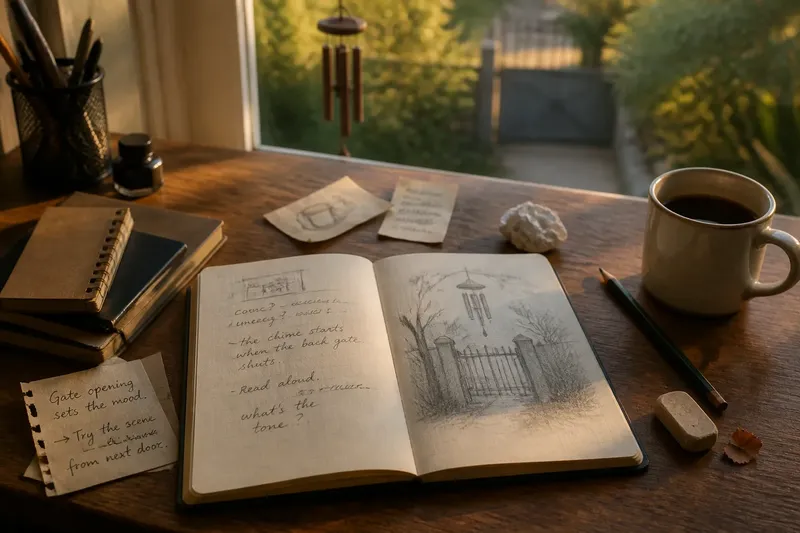
Say you are unsure whether a short scene about a neighbour’s wind chime should be comic or uneasy. You write a brief version in which the chime starts when the back gate shuts, then read it aloud. If the timing makes the scene feel comic, you can try a second line that sharpens the joke; if it feels uneasy instead, you can keep the quiet opening and add a detail that supports that tone. The result is a choice between two directions, not a finished story.
How do you keep the first attempt manageable?
Limit the test to one decision. You might explore the voice of a narrator, the silhouette of a mug or the mood of a single exchange. Avoid trying to settle the plot, composition or final style at the same time; too many questions can make a small experiment feel like the whole project.
Use materials that let you change course. A pencil line, a separate document or a scrap of paper makes revision straightforward. A placeholder such as “[name]” can stand in for a detail that is not relevant to the question you are testing.
It is not worth spending the session finding the perfect notebook, arranging an elaborate workspace or choosing a playlist before you begin. If a preferred tool is unavailable, use a plain substitute and save special preparation for a later stage when the work needs it.
What should you do with the result?
Compare the sample with the question you started with. Name what it helped you decide, even if the answer is that the idea needs a different form or no longer interests you. This keeps the next choice grounded in the material instead of in a vague judgement about whether you are talented or inspired.
If the sample points towards a promising direction, make one further test that explores a different aspect. For a scene, try the same moment from another character’s point of view. For a drawing, make a second thumbnail with a changed arrangement. If the sample does not point anywhere, pause without turning that pause into a verdict on your ability.
When you stop, leave a short note that records the decision and a possible next action: “The gate opening sets the mood; try the scene from next door.” Keep it as an option, not a commitment. You can return to the idea, change direction or leave it behind.
What do people ask about starting without inspiration?
Should you wait until you feel inspired?
You can begin with a small test before that feeling arrives. If a particular mood matters to your work, notice it, but do not make it a condition for every attempt.
What if you do not know what to make?
Choose one subject you can already picture, such as a cup on the sink or a sound outside the window, and make a rough sample from it. If the sample suggests a direction, follow it; if not, choose a different subject.
Does a small start mean you must keep going?
No. The sample is there to help you decide whether to continue, alter the idea or stop. You do not owe it a finished piece.
What if the first attempt feels poor?
Ask whether it answered the question you set. If it did, use that answer to choose the next direction; if it did not, change one part of the test rather than trying to perfect the entire piece.
How can you tell whether to continue or pause?
Continue if the sample has revealed a specific possibility you want to explore. Pause if the next move remains vague, or if the idea no longer interests you. Those are different situations: the first calls for a clearer test, while the second may call for setting the project aside.
The inspiration myth makes starting seem like a spark you must wait to receive. A small test gives you a more useful choice: make one provisional version, see what it helps you decide, and let that decision shape what comes next. When you search for a way past the inspiration myth, begin with a test that can change your mind as easily as it can encourage you to continue.