The Pocket List: Turning Loose Ideas into a First Draft
Use a pocket list to turn loose observations into a first draft, with a simple week-long routine for finding a question and shaping a workable path.
A pocket list can turn loose ideas into a first draft by grouping a few observations around one question. You do not need to rank every note or build a perfect outline first; you need a small cluster that suggests what the reader should see next.
The method suits notes gathered in a phone, on receipts, in a notebook margin or during an ordinary walk. Its purpose is not to collect more material. It is to notice which scraps are already speaking to one another, then give that connection a temporary shape.
What belongs on a pocket list?
A pocket list is a short, unranked set of concrete observations, phrases or questions gathered around a single subject. Each entry should be small enough to move: “the kettle clicks before it boils” is easier to place than “thoughts about kitchens”.
Keep the original wording when it carries a useful detail. A list might hold a sound, a remembered gesture, a contrast, a physical object and a question. These do not have to be equally important, and you do not need to explain their connection yet.
For a first attempt, collect a handful rather than every thought you have. The limit is a working boundary, not a rule about how much material a good piece needs. If the list grows, mark a few entries that seem vivid or puzzling and set the rest aside.
How do you find one question?
Look across the entries for a shared tension, change or uncertainty. A useful question is narrow enough to keep the draft together but open enough to let the observations answer it in different ways.
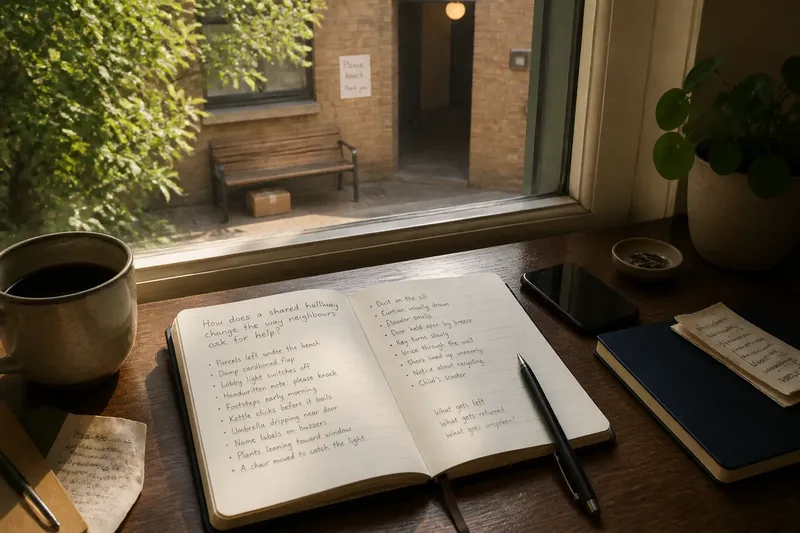
Suppose your notes mention a neighbour’s parcels left under a bench, a damp cardboard flap, the lobby light switching off and a handwritten note asking residents to knock. “What happens to parcels?” is broad. “How does a shared hallway change the way neighbours ask for help?” gives the details a more purposeful centre.
Write the question at the top of the list, then check each entry against it. Keep an observation if it adds evidence, texture or complication. If it only reminds you of a different subject, move it to a separate list rather than forcing it into this draft.
What should you do across the week?
A week gives you enough time to gather, sort and draft without turning a small writing exercise into a permanent project. The days below are flexible appointments with the idea: if you miss one, continue from the next useful point rather than restarting.
- Day one — collect. Choose a subject you can observe or remember clearly. Add a few specific notes to one place, without ordering them or trying to turn them into polished sentences.
- Day two — notice. Read the entries once and add any missing sensory or situational detail you can recall. Keep additions brief; this is not the moment to research every reference or expand each note into a paragraph.
- Day three — cluster. Put related entries beside one another on paper or move them into a notes app. Look for a contrast or question that gives the cluster a reason to exist.
- Day four — choose the centre. Write one question above the list. Remove, park or revise entries that do not help you explore it, and leave the remaining notes unranked.
- Day five — test the path. Arrange the notes in a possible reading order. Try beginning with a concrete observation, then moving through a complication or change, and ending with what the question has made clearer.
- Day six — draft. Turn the arranged notes into connected prose. Use plain transitions where needed, and put a bracketed reminder wherever the reader needs context you have not yet supplied.
- Day seven — read and revise. Read the draft aloud or quietly from the beginning. Check that each paragraph helps answer the central question, then repair gaps and remove material that has drifted away from it.
If your writing time is limited, these appointments can be short. The useful distinction is between collecting material, choosing a centre and making sentences; doing all three at once can make a small list feel harder than it is.
How can an unranked list become a draft path?
Order the notes by what a reader needs to encounter, not by how important you think each one is. A clear draft often moves from a visible detail to a pattern, then to an exception or question that changes how the detail is understood.
Imagine you have noted a plant leaning towards a window, a chair moved to catch the light, dust on the sill and a curtain that is usually drawn. You might ask, “What small habits shape the way a room receives daylight?” Beginning with the chair gives the reader a human action; the plant and dust add consequences, while the curtain complicates the idea that the room is simply open to light.
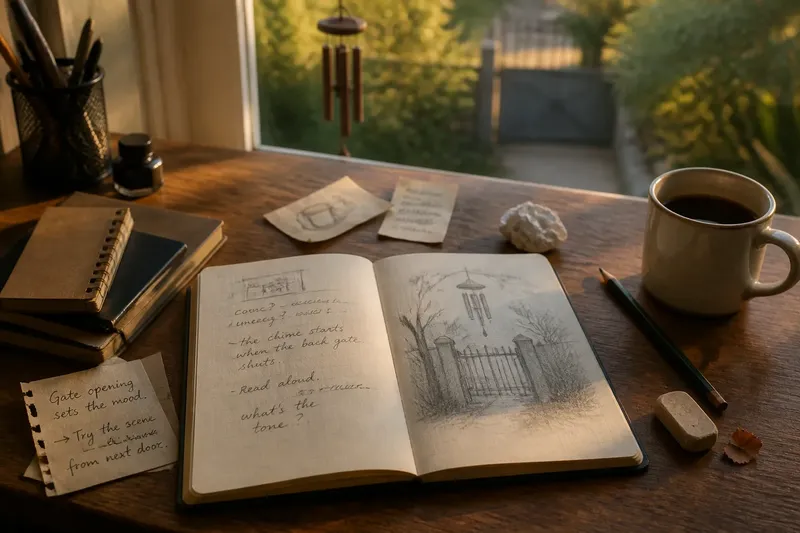
The question does not have to appear as the first sentence. It can remain your private steering line while the draft begins with the chair, the plant or another concrete observation. At the end, you can decide whether the question belongs in the piece or has already done its work behind the scenes.
Transitions can name the connection between notes: “That change is easy to miss,” “But the pattern is not consistent,” or “The detail points to a different question.” Use them to make the movement legible, not to disguise a missing connection. If two entries need an elaborate explanation to sit together, they may belong in separate pieces.
What if the question or order still feels uncertain?
What if the list contains unrelated observations?
Look for a smaller shared feature, such as a repeated sound, a choice people make or a change across the day. If no question brings the notes together without strain, split the list and let each smaller group become a possible starting point.
What if two questions seem equally useful?
Write each question on a separate line and place the observations beneath the one they serve most clearly. Choose the question that produces a more specific opening and a more natural ending, rather than the one that sounds grander.
What if the draft feels like a sequence of notes?
Check whether you have explained why one observation follows another. Add a sentence that names the relationship, supplies necessary context or shows a shift in your thinking; if you cannot do that honestly, change the order or remove the entry.
What if I cannot answer the question?
You do not need a final verdict for a useful draft. Narrow the question to something the notes can show, or let the piece describe what remains unresolved while making clear what you have observed.
What is not worth doing yet?
Do not turn the pocket list into a miniature filing system. Colour-coding, elaborate tags and a polished outline can feel productive, but they often delay the more useful decision: what question makes these particular observations belong together?
Nor should you force every entry to earn a place. A note can be good and still be wrong for this draft. Save it under a separate subject or leave it in the margin; keeping it does not require using it now.
When is the first draft ready to revise?
The draft is ready for revision when a reader can follow its movement from the opening detail through the linked observations to a closing thought, even if some sentences are rough. Read it with the question in mind and mark where the piece wanders, repeats itself or asks the reader to make a connection you have not shown.
Revise the path before polishing every phrase. Move a paragraph, add a missing bridge or cut an appealing detail that belongs elsewhere. Then read the piece again without looking at the list: if the draft still makes sense, the pocket list has done its job.
A pocket list is most useful when it stays provisional. The question gives your first draft direction, while the observations keep it grounded; during revision, either can change if the writing reveals a better connection.